
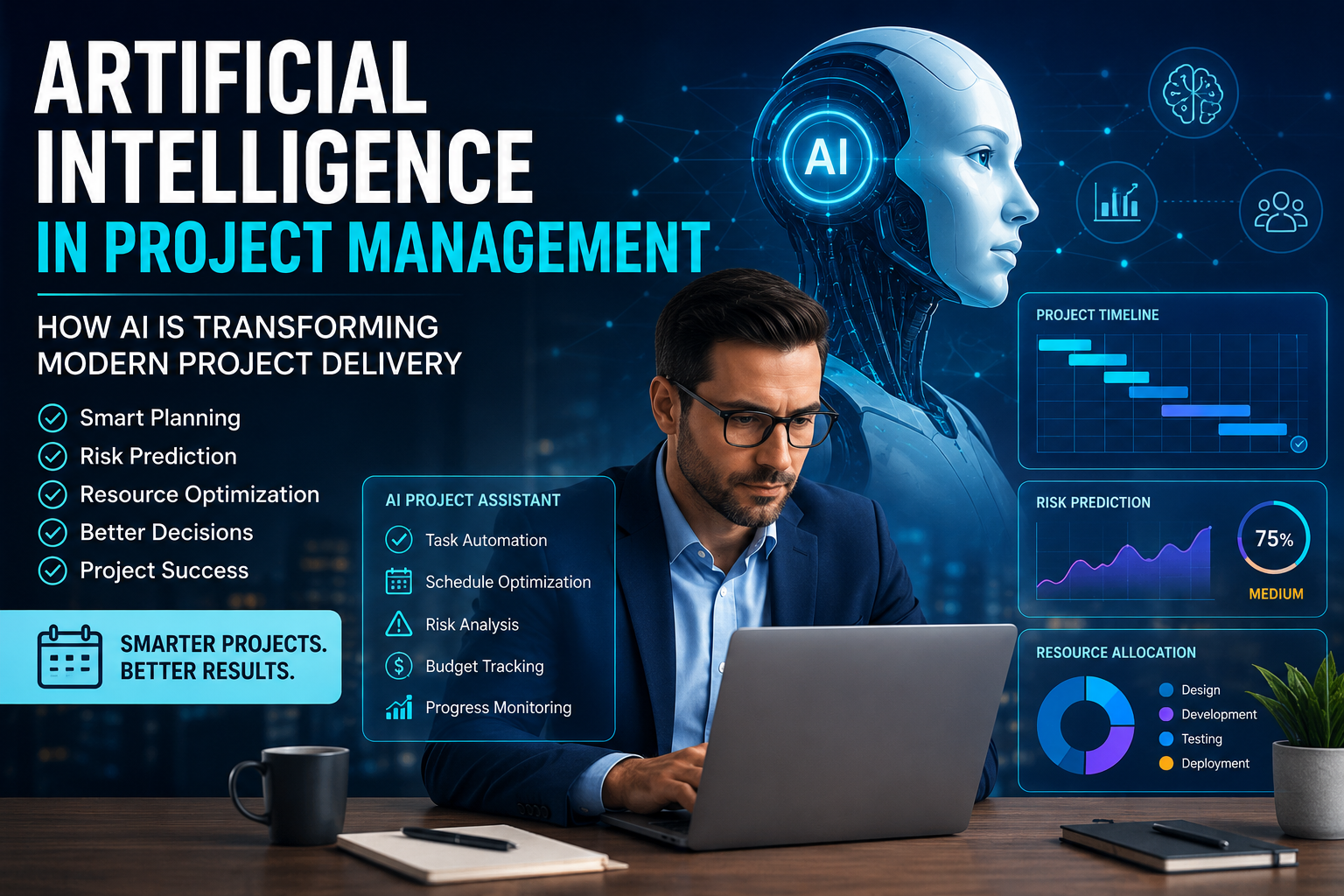
Artificial Intelligence in Project Management: How AI is Transforming Modern Project Delivery in 2026
Project management has evolved significantly over the past decade. Traditional methods that relied heavily on spreadsheets, manual reporting, and meetings are being replaced by intelligent systems powered by Artificial Intelligence (AI). Organizations across industries are adopting AI to improve planning, reduce project risks, increase productivity, and deliver projects on time.
Whether you’re a project manager, business owner, software developer, or executive, understanding AI’s role in project management is becoming essential.
What is Artificial Intelligence in Project Management?
Artificial Intelligence refers to computer systems capable of performing tasks that typically require human intelligence, such as learning from data, recognizing patterns, making predictions, and automating repetitive activities.
In project management, AI assists teams by:
- Predicting project delays
- Automating scheduling
- Identifying project risks
- Monitoring budgets
- Generating reports
- Improving resource allocation
- Supporting better decision-making
Instead of replacing project managers, AI enables them to focus on leadership, communication, and strategic planning.
Why Businesses are Adopting AI
Organizations face increasing pressure to deliver projects faster while maintaining quality and controlling costs. AI helps address these challenges by providing data-driven insights that improve project outcomes.
Key benefits include:
- Faster project planning
- Improved forecasting
- Reduced operational costs
- Enhanced collaboration
- Better resource utilization
- Increased project success rates
Top Benefits of AI in Project Management
1. Intelligent Project Planning
AI can analyze historical project data and estimate project duration, required resources, and potential risks before execution begins.
2. Risk Prediction
Machine learning algorithms identify potential issues early, allowing project managers to implement mitigation strategies before problems escalate.
3. Automated Scheduling
AI automatically adjusts project schedules based on resource availability, task dependencies, and changing priorities.
4. Budget Optimization
AI continuously monitors project expenses and predicts budget overruns before they occur.
5. Resource Management
Organizations can allocate the right people to the right tasks using AI-powered recommendations based on skills, availability, and workload.
6. Performance Analytics
Real-time dashboards help management monitor project health, identify bottlenecks, and improve decision-making.
Popular AI Tools for Project Managers
Several AI-powered platforms are helping organizations manage projects more efficiently:
- Microsoft Copilot
- Jira AI Features
- Asana Intelligence
- ClickUp AI
- Monday.com AI
- Notion AI
- ChatGPT
These tools assist with meeting summaries, documentation, task prioritization, workflow automation, and reporting.
AI in Software Development Projects
Software development teams benefit significantly from AI by:
- Automatically generating documentation
- Reviewing code quality
- Detecting bugs
- Estimating development effort
- Managing sprint planning
- Improving testing efficiency
Challenges of AI Adoption
Despite its advantages, organizations should be aware of several challenges:
- Data privacy concerns
- Integration with existing systems
- Employee training requirements
- Initial implementation costs
- Dependence on high-quality data
A successful AI implementation requires proper planning, governance, and change management.
Future Trends
Over the next five years, AI is expected to become a standard component of project management. Emerging trends include:
- Predictive project governance
- Autonomous project scheduling
- AI-powered PMO dashboards
- Intelligent stakeholder communication
- Voice-enabled project assistants
- Advanced portfolio optimization
Project managers who embrace AI will gain a competitive advantage in delivering successful projects.
Final Thoughts
Artificial Intelligence is no longer a futuristic concept—it is already reshaping the way organizations manage projects. By automating repetitive tasks, providing predictive insights, and improving collaboration, AI enables project managers to focus on strategy, innovation, and leadership.
As businesses continue their digital transformation journeys, AI will become an indispensable partner in achieving project success.


